The lowest stated spot Bitcoin ETF fee in this August 25, 2026 snapshot is 0.15% for Grayscale Bitcoin Mini Trust ETF (BTC). EZBC follows at 0.19%; BITB and HODL state 0.20%; ARKB charges 0.21%; several major products, including IBIT and FBTC, charge 0.25%. GBTC remains the high-fee outlier at 1.50%.
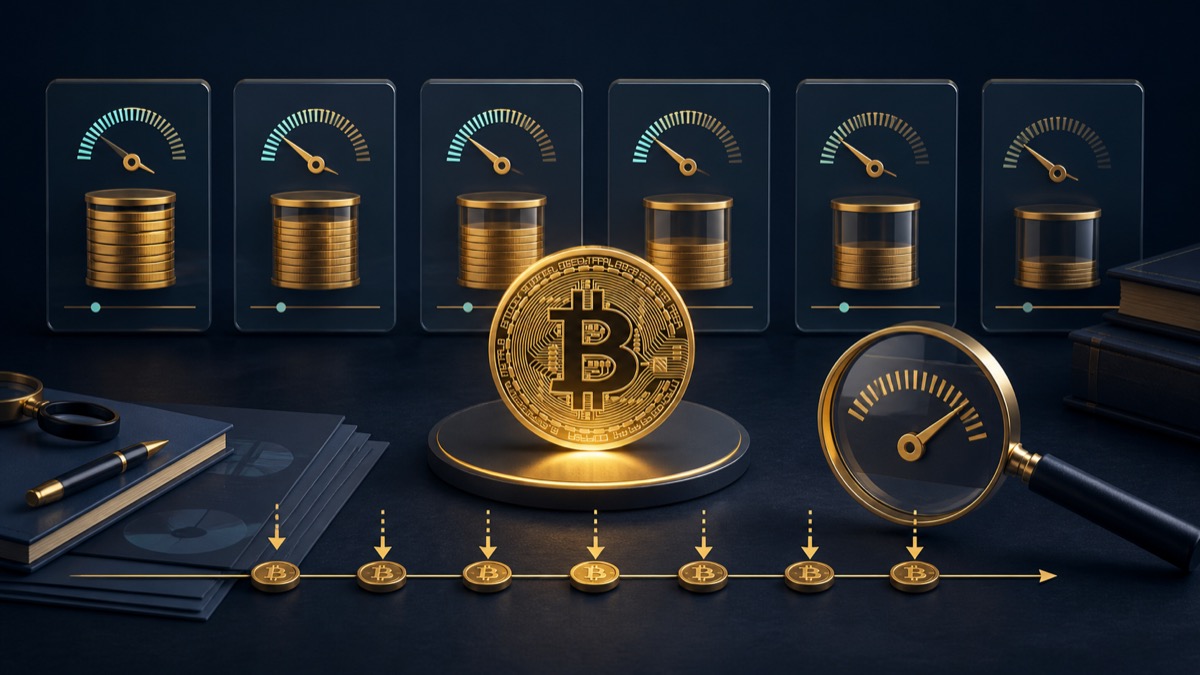
Original illustration by Best ETF to Buy Now. Gauges are conceptual and do not represent live fees or returns.
Spot Bitcoin ETF Fee Comparison
| Ticker | Product | Stated annual fee | Approx. annual cost per $10,000 |
|---|---|---|---|
| BTC | Grayscale Bitcoin Mini Trust ETF | 0.15% | $15 |
| EZBC | Franklin Bitcoin ETF | 0.19% | $19 |
| BITB | Bitwise Bitcoin ETF | 0.20% | $20 |
| HODL | VanEck Bitcoin ETF | 0.20% | $20 |
| ARKB | ARK 21Shares Bitcoin ETF | 0.21% | $21 |
| IBIT | iShares Bitcoin Trust ETF | 0.25% | $25 |
| FBTC | Fidelity Wise Origin Bitcoin Fund | 0.25% | $25 |
| BTCO | Invesco Galaxy Bitcoin ETF | 0.25% | $25 |
| BRRR | CoinShares Valkyrie Bitcoin Fund | 0.25% | $25 |
| BTCW | WisdomTree Bitcoin Fund | 0.25% | $25 |
| GBTC | Grayscale Bitcoin Trust ETF | 1.50% | $150 |
Data snapshot: August 25, 2026. This table compares the continuing stated fee rather than an expired launch promotion. HODL and other products have used waivers, so verify the current product page and prospectus before relying on any rate.
How We Checked the Fees
We compared issuer product pages and prospectus materials, then cross-checked the category with a July 9, 2026 Digital Assets Council of Financial Professionals table. The calculation column simply multiplies $10,000 by the stated annual percentage; it does not forecast account value or include trading costs.
These products are commonly called ETFs, but many U.S. spot Bitcoin products are exchange-traded commodity trusts rather than investment companies registered under the Investment Company Act of 1940. That legal distinction is one reason investors should read the product-specific risk disclosure rather than assume every familiar ETF protection applies.
How Bitcoin ETF Fees Are Actually Paid
The fee is deducted inside the product rather than billed separately to most shareholders. A trust can sell or transfer a small amount of its Bitcoin to pay the sponsor. Over time, each share represents slightly less Bitcoin than it would have without the fee.
Suppose the investment value stayed at $10,000 for a full year. A 0.15% fee is about $15, while 0.25% is about $25. The ten-dollar gap is modest for one year. It compounds across a long holding period, and the dollar fee rises or falls with the account value.
The illustration is intentionally simple. Bitcoin will not remain at a fixed price, and tracking differences can make the realized result differ from a straight fee subtraction.
When the Lowest Fee Is the Better Choice
A lower fee matters most for a long holding period when trading quality is already adequate. If two products provide similar exposure, acceptable custody arrangements and reasonable spreads, paying 0.15% instead of 0.25% leaves more of the underlying exposure in the account.
At a constant $50,000 balance, that 0.10 percentage-point difference is about $50 in the first year. It does not eliminate Bitcoin risk, but it is a known cost that an investor can control.
Low fee alone is not enough. Check whether your brokerage offers the product, whether the fund has meaningful assets and activity, and whether the bid-ask spread is stable when you intend to trade.
Why the Bid-Ask Spread Can Matter More
For a short holding period, the spread can outweigh a small annual fee difference. You buy near the ask and sell near the bid. That round-trip trading cost is felt immediately, while the expense ratio accrues over time.
For example, a 0.20% spread on a $10,000 purchase represents roughly $20 of entry friction before price movement. A 0.10 percentage-point annual fee advantage is only about $10 per year on the same static balance. Real execution will differ, but the comparison shows why “cheapest” cannot be decided from one column.
Use a live quote. Published median spreads are historical summaries, not promises, and crypto-related spreads can widen when Bitcoin moves sharply outside U.S. market hours.
GBTC’s 1.50% Fee Changes the Math
GBTC is the clear cost outlier in this group. At 1.50%, the simple annual charge on $10,000 is about $150, compared with $15 for BTC or $25 for IBIT and FBTC.
Existing GBTC holders may still face tax, spread or account-specific consequences when selling. The lower fee does not automatically make an immediate switch correct. Investors with taxable gains should calculate the tax impact and seek qualified advice when needed.
Do not confuse GBTC with BTC. They are separate Grayscale products with different fees and share histories.
Fee vs Liquidity: IBIT and FBTC as a Case Study
IBIT and FBTC both state a 0.25% fee. IBIT is much larger based on the issuers’ recent published assets, while FBTC uses Fidelity Digital Assets for custody. The choice therefore moves away from the expense ratio and toward execution, account preference and operating structure.
Our detailed IBIT vs FBTC comparison examines those differences. Readers tracking current demand can also review the dated August 2026 Bitcoin ETF inflow analysis.
A Four-Check Buying Process
- Confirm the current fee. Read the issuer’s product page and prospectus; do not rely on an old promotional waiver.
- Check the live spread. Compare bid and ask during normal market hours and consider a limit order.
- Review structure and custody. Identify the custodian, benchmark and how fees are paid from the trust.
- Size the Bitcoin exposure first. A 0.10% fee saving cannot compensate for a position that exceeds your ability to tolerate a deep drawdown.
For portfolio context, compare a speculative allocation with a diversified three-fund portfolio before treating any Bitcoin fund as a core holding.
Frequently Asked Questions
Which spot Bitcoin ETF has the lowest fee?
Grayscale Bitcoin Mini Trust ETF (BTC) had the lowest stated fee in the products reviewed, at 0.15% as of August 25, 2026. Confirm the current prospectus because fees and waivers can change.
How are Bitcoin ETF fees charged?
You generally do not receive a separate invoice. The trust pays its fee from fund assets, often by disposing of a small amount of Bitcoin, so the Bitcoin represented by each share gradually declines.
Is the cheapest Bitcoin ETF always the best?
No. A lower annual fee helps long-term holders, but spreads, premium or discount to NAV, liquidity, custody and brokerage access may matter more for a short holding period or a large order.
Bottom Line
BTC leads this fee comparison at 0.15%, while several credible alternatives fall between 0.19% and 0.25%. Long-term investors should care about those differences. Still, the best practical choice is the low-cost product that also offers acceptable live spreads, sufficient liquidity, a structure you understand and access through your brokerage.
Sources
- Grayscale: Grayscale Bitcoin Mini Trust ETF (BTC), accessed August 25, 2026.
- Franklin Templeton: Franklin Bitcoin ETF (EZBC), accessed August 25, 2026.
- Bitwise: Bitcoin ETF launch and fee disclosure.
- BlackRock: iShares Bitcoin Trust ETF (IBIT).
- Fidelity: FBTC prospectus.
- DACFP: Spot Bitcoin ETF Investor Guide, updated July 9, 2026.
- SEC Investor.gov: Exchange-traded products providing exposure to Bitcoin and Ether.
Disclosure: This article is educational and does not provide individualized investment, tax or legal advice. Bitcoin products can be highly volatile, and investors may lose most or all of their investment. Product terms can change.